
33% VLT, 3% Tolerance: Arizona Window Tint Rules and Meter Proof
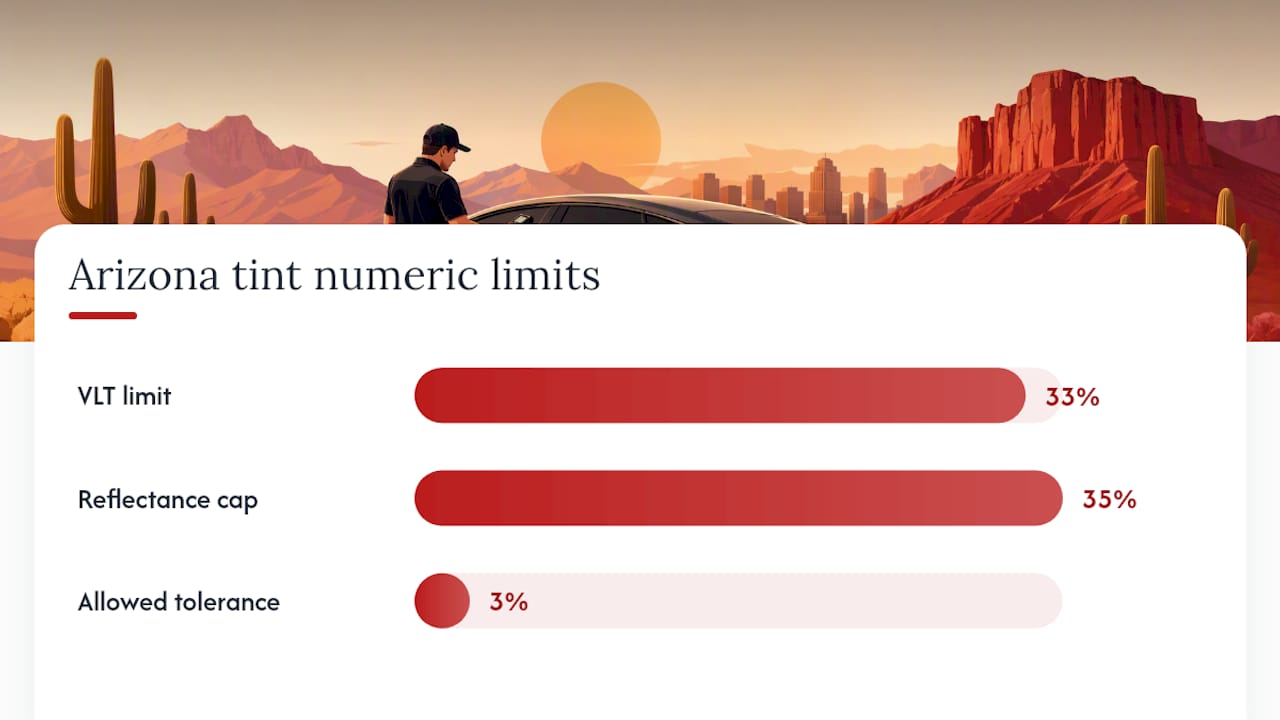
Arizona law caps front side window tint at 33% VLT with a 3% tolerance, allows any darkness on rear windows and the rear windshield as long as reflectivity stays under 35%, and restricts the windshield to a non-reflective strip above the AS-1 line. If you get pulled over with tint darker than that, and you’re looking at a fix-it ticket, not a felony. The fix is simple: know the numbers before you sit in the installer’s chair, and insist on a finished-vehicle meter reading.
TL;DR:
Front side windows must allow more than 33% VLT with a 3% tolerance, while rear windows and the rear windshield can be as dark as desired if reflectivity stays below 35%.
The combined VLT reading from a tint meter is lower than the film’s rated percentage, so a finished-vehicle measurement is essential to ensure compliance.
The law caps reflectivity at 35%, and metallic or mirror films often violate this limit even if the VLT rating appears legal.
Medical exemptions permit darker tint on side and rear windows but do not allow modifications beyond the standard windshield strip, requiring documentation for legal use.
Illegal tint tickets are fix-it violations with fines typically between $100 and $250, and proof of correction is necessary to dismiss violations and prevent insurance issues.
Table of Contents
Understanding Arizona Window Tint Laws by Window Type
Every tint law in the state comes down to two measurements: visible light transmission (VLT) and luminous reflectance. VLT tells you how much light passes through the glass and film combined. Reflectance tells you how much light bounces back off the surface, which is what creates that mirrored look on some cars. Arizona Revised Statutes § 28-959.01 sets the actual thresholds, and they’re not the same for every window on your car.
Here’s how the statute breaks it down:
Front side windows (driver and front passenger): must allow more than 33% VLT, with a 3% tolerance built in
Rear side windows: no minimum VLT, meaning you can go as dark as you want back there
Rear windshield: also no minimum VLT, same freedom as the rear side windows
Windshield: tint is limited to a non-reflective strip above the manufacturer’s AS-1 line
One detail trips up a lot of car owners: film percentage and legal VLT are not the same number. A film box that says “35% tint” measures the film alone, not the film layered over your factory glass. That combined reading is what an officer actually checks, and it’s almost always lower than the film’s rated percentage.
How Officers Measure Tint and Why the 3% Tolerance Matters
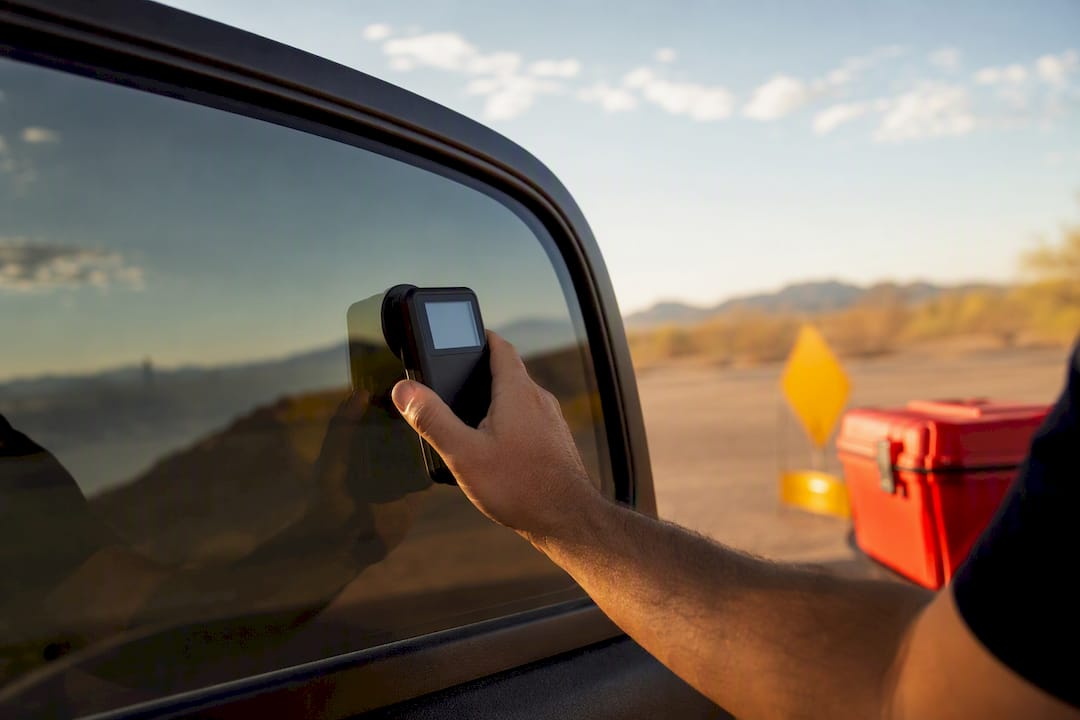
Officers and installers both use a handheld tint meter that clamps onto the glass and reads combined VLT on the spot, factory glass and film together. That reading is the only number that matters legally.
Here’s why the math surprises people:
Combined VLT equals factory glass transmission multiplied by the film’s rated VLT.
A common example: 75% factory glass times 50% film works out to roughly 37.5% combined VLT, which passes.
Swap that same glass for a 35% film, and the combined reading drops to about 26%, which fails on a front window every time, according to LegalClarity’s breakdown of Arizona’s tint percentages.
That’s where the ±3% tolerance earns its keep. It gives installers a small cushion for glass variation and meter calibration drift, not a green light to shoot for 30% and call it close enough.
Pro Tip: Ask your installer for a printed finished-meter reading before you drive off, and keep it in your glovebox. If you’re ever stopped, it’s the fastest way to prove your tint was legal at install.
Why Arizona Caps Reflectivity, Not Just Darkness
Darkness isn’t the only thing the law regulates. Side and rear windows also carry a 35% reflectivity cap, with the same 3% tolerance as the VLT rule. Reflectance measures how much light bounces off the tint’s surface rather than passing through it, and it’s a separate spec from VLT entirely.
The reasoning is practical. Highly reflective, mirror-style films throw glare onto other drivers, and under Arizona’s sun that glare can be genuinely dangerous. Films marketed as “chrome” or “mirror” finishes are the most common violators of this cap, even when their VLT rating looks compliant on paper.
A few other rules round out the reflectivity and color restrictions:
The windshield strip cannot be red or amber, regardless of how it measures on reflectance or VLT
If your rear window carries any tint at all, you’re required to run dual outside mirrors that give you at least 200 feet of rear visibility
Neutral gray or charcoal films tend to stay compliant on both reflectance and color far more reliably than metallic or colored options
If you’re choosing a film, this is the category where cosmetics and compliance most often collide, so lean neutral.
Getting a Medical Exemption for Darker Tint in Arizona
Drivers with a documented medical need for extra protection from direct sunlight can apply for an exemption that permits darker film on side and rear windows. The exemption does not extend below the legal windshield strip, so even approved applicants can’t tint the windshield itself beyond the standard strip.
The process runs through Arizona’s Motor Vehicle Division, and it requires more than a doctor’s note scribbled on a prescription pad:
A licensed physician must complete a written attestation describing the medical condition and need
You submit that attestation along with Form 40-1511 through MVD’s Medical Review Program
Once approved, you must carry the exemption certificate in the vehicle at all times, since it’s your proof during a traffic stop
Don’t assume an exemption is automatic or informal. MVD reviews each application on its own medical merits, and an unapproved application offers zero legal protection if you’re already driving around with illegal tint.
What Happens If You Get a Tint Citation in Arizona
Illegal tint in Arizona is treated as an equipment violation, not a criminal offense. Officers typically issue what’s known as a fix-it ticket, and fines commonly fall in the $100 to $250 range before court surcharges, though exact amounts vary by jurisdiction, according to LegalClarity’s review of Arizona’s tint penalties.
If you get cited, here’s the fastest path through it:
Remove or replace the non-compliant film as soon as possible.
Get proof of the correction, whether that’s a receipt from a reputable installer or a follow-up meter reading.
Return to the court listed on your citation if it requires proof of compliance to dismiss the fine.
Beyond the ticket itself, illegal tint can complicate an insurance claim after a crash, since insurers sometimes flag non-compliant modifications during review. Keeping your installation receipt and any finished-meter documentation protects you on both fronts, the traffic stop and the claims adjuster.
Choosing a Compliant Tint Installer in Arizona
The single best question to ask any Arizona installer is whether they’ll hand you a finished-meter reading after the job, not just before. A reading taken on bare glass before installation tells you nothing about your legal compliance once the film is on.
Before you book, run through this checklist:
Ask for the product’s rated VLT and reflectivity specs in writing
Confirm the installer understands the difference between film-rated VLT and combined VLT under ARS § 28-959.01
Request a demonstration of their tint meter on a sample piece of glass if you’re unsure of their process
After the install, keep the finished-meter printout and receipt together, double-check that your mirrors meet the visibility requirement if the rear windows are tinted, and store any medical exemption certificate in the vehicle where it’s easy to produce. Providers offering ceramic window tint as part of a broader detailing service tend to have more experience navigating these thresholds than a shop that only does volume tint jobs.
Pro Tip: If an installer won’t commit to measuring the finished product, walk away. A shop confident in its compliance will measure without being asked.
A Local Installer’s View on Compliance
We’ve measured a lot of glass across the Phoenix metro, and the pattern is consistent: most tint violations aren’t intentional, they’re the result of trusting a film’s box rating instead of the finished vehicle.
Working mobile gives us an advantage here. We verify compliance on-site, in your driveway or office lot, and hand over a documented meter reading before we pack up. That paperwork is your protection if you’re ever stopped. If you’re unsure whether your current tint passes, ask us to check it.
— Phenomenal
Book Compliant Window Tinting With Phenomenal Auto Care
Skip the guesswork on whether your tint will pass a roadside check. Phenomenalautocare handles mobile window tinting across the Phoenix metro area with a straightforward compliance guarantee: every install gets verified with a finished-vehicle meter reading before we call the job done, using films selected to meet Arizona’s VLT and reflectivity thresholds from the start.

That mobile setup means we come to your home or office, so there’s no dropping the car off for a full day at a shop across town. Phenomenalautocare has built a 5-star reputation with more than 250 Arizona customers by treating compliance as part of the job, not an afterthought tacked on if you ask. Whether you’re in Phoenix, Mesa, or Tempe, our window tint services come with the documentation to back up every install. Ready to get tint that’s actually legal the first time? Book your mobile detailing appointment and we’ll bring the meter with us.
This article is general information, not a substitute for advice from a qualified lawyer. Consult a qualified legal professional about your own circumstances before acting on anything here.
Sources
Recommended
Comments