
End Smoke Odor in Your Car: Deep Clean First, Then 10 Minute HVAC Fog
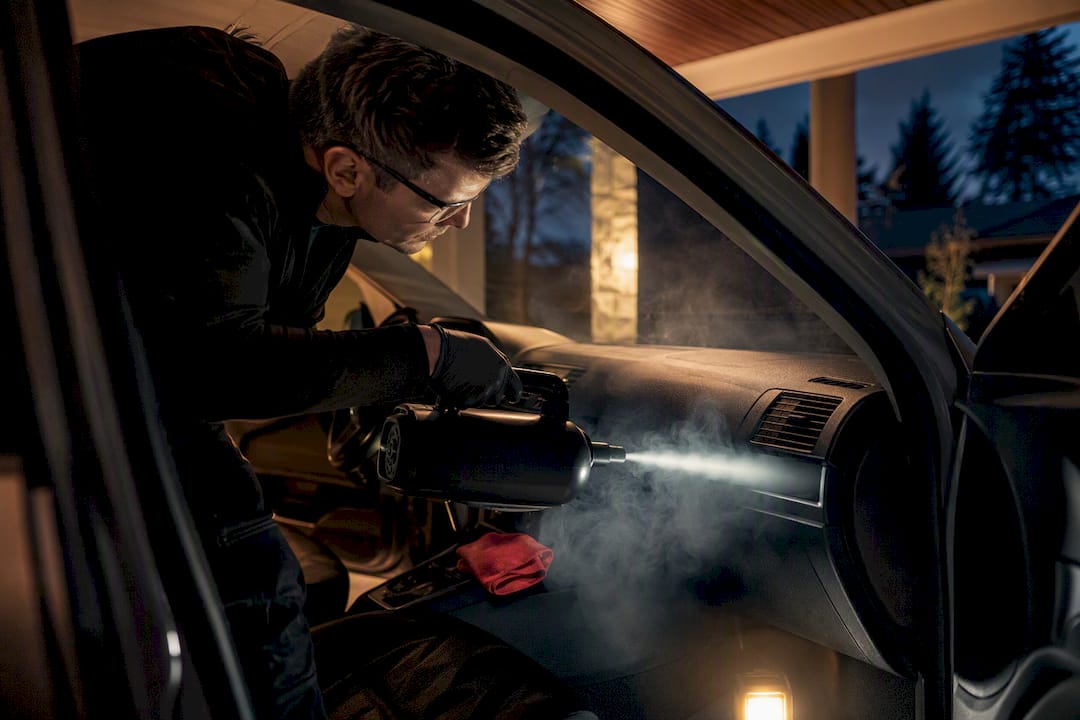
Light, recent smoke smell usually responds to a determined home cleaning and the right absorbers within a day or two. Smoke that’s soaked into foam padding, the headliner, or the HVAC system over months or years typically needs a full deep clean plus professional treatment like steam extraction or ozone. Ozone and thermal foggers work, but only after cleaning, and only in an unoccupied vehicle with proper ventilation afterward.
TL;DR:
Smoke embedded in foam padding, headliner, or HVAC components requires a deep clean and professional treatment, not just surface wiping.
Using enzyme cleaners or oxidizers effectively neutralizes smoke odor, but only after thorough extraction and drying of the interior materials.
Replacing the cabin air filter with an activated-charcoal version and fogging the HVAC system are essential steps to prevent odor recurrence.
Masking odors with fresheners provides only temporary relief and should be used only after source neutralization is complete.
Severe cases may need professional treatments like ozone or coil cleaning, as DIY methods often fail to fully eliminate persistent embedded smoke smells.
Table of Contents
How to Tackle Smoke Odor Removal in a Car Quickly
Before you reach for any spray, understand where the smell is actually coming from. Smoke odor removal in a car fails most often because people treat the surface and ignore the reservoir underneath it. Smoke particles are oily and microscopic, and they cling to anything porous: cloth seats, carpet fibers, foam padding, the headliner fabric, and the cabin air filter that pulls outside air through your vents. That’s why a car can get a full wipe down and still smell like an ashtray the next humid afternoon.
We treat every smoke job as source hunting first, cleaning second. If you skip the diagnosis and just mask the smell, you’re buying yourself a week, not a fix. Here’s how to knock down the smell fast if the smoke exposure was light or recent.
Clear out trash, ash trays, cigarette butts, and any visible debris. Residue left in cup holders and door pockets keeps re-releasing odor.
Vacuum every inch, including seat seams, under the seats, and floor gaps, using a crevice tool to reach where lint and ash settle.
Sprinkle baking soda generously over seats and carpet, work it in with a brush, let it sit for several hours or overnight, then vacuum it out. Baking soda and activated charcoal both adsorb odor molecules, but Consumer Reports notes they only handle light, surface-level smell, not smoke that’s worked its way into padding.
Wipe hard surfaces, dashboards, door panels, and interior glass with a diluted vinegar or isopropyl alcohol solution to cut the oily smoke film that clings to plastic and glass.
Set out an open container of fresh coffee grounds or an activated charcoal bag overnight as a passive absorber, and don’t leave food wrappers or drinks behind. They trap odor molecules and add to the funk.
Pro Tip: Don’t confuse a car freshener with a fix. A hanging deodorizer masks the smell temporarily, which is fine for a test drive tomorrow, but it does nothing for smoke that’s embedded in foam. Save the air freshener for after you’ve actually neutralized the source.
Deep-Clean Steps to Remove Embedded Smoke Smell
Once the quick fixes stop moving the needle, you’re dealing with smoke that has settled into the materials, not just the surface. This is where order matters more than effort. Detailing professionals consistently follow a diagnosis, strip, extract, dry, and treat sequence, and skipping a step is the most common reason DIY smoke jobs come back within a month.
Map the smell. Walk the cabin with the windows shut for a few minutes, then check the seats, headliner, carpet, and vents individually. Whichever area smells strongest when you lean in close is your primary source.
Strip and vacuum. Pull the floor mats, vacuum thoroughly with a crevice tool, and lift seat cushions where your vehicle allows to get underneath them.
Shampoo and extract fabric. Run a hot water extractor or steam cleaner over carpets and cloth seats. Extraction pulls out the residue that shampooing alone leaves behind, and Chemical Guys points to this step as the difference between a temporary fix and a lasting one.
Treat the headliner carefully. Use light passes with a steam attachment or a barely damp microfiber cloth. Oversaturating headliner fabric causes it to sag or separate from its backing, which is a repair headache far worse than the smell.
Clean every hard surface, including the glass. Smoke leaves an oily film on the windshield and windows that holds onto odor and often gets skipped entirely during a normal cleaning pass.
Dry it out completely. Crack windows or run a fan until everything is bone dry. Trapped moisture invites mildew, which adds a second odor problem on top of the first.
Apply the right neutralizer. Enzyme cleaners work on organic residues and need real dwell time, often 10 to 15 minutes before extraction, while oxidizing treatments target smoke compounds more directly.
Pro Tip: Patience during the drying and dwell stages is what separates a smell that’s actually gone from one that’s just hiding. Rushing an enzyme treatment or closing up a damp cabin undoes the whole process.
Why the Cabin Air System Keeps Bringing the Smell Back
If you’ve cleaned the interior and the smoke smell still greets you every time the vents kick on, your HVAC system is the culprit. The cabin air filter and evaporator core both trap smoke particles, and every time the fan runs, it pushes that trapped odor right back into the cabin.
Pull the cabin air filter and inspect it. If it’s discolored or holds a smoke smell of its own, replace it, and choose an activated-charcoal filter for extra odor adsorption going forward. Consumer Reports flags filter replacement as one of the highest-value, lowest-effort fixes available to car owners.
Use a fogger designed for HVAC treatment as directed, placing it where the intake pulls air and running the system in recirculate mode. One product example treats the cabin and HVAC in roughly 10 minutes when the vehicle is left sealed and unoccupied, followed by a ventilation period.
If the smell keeps returning after a filter swap and a fogging treatment, the evaporator core itself may need a professional cleaning or coil treatment that isn’t a DIY job.
Which Products Actually Neutralize Smoke Instead of Masking It
Most odor sprays sold at gas stations mask smell rather than remove it, which is why they stop working the moment the bottle runs out. CarCareTruth draws a clear line between masking, adsorption, and true chemical neutralization, and buying by mechanism instead of by scent name saves you money and repeat trips to the store.
Enzyme cleaners break down organic residue from smoke, saliva, or spills. They need to dwell time, usually several minutes before you extract or wipe them away, so read the label and don’t rush it.
Oxidizers, including chlorine dioxide-based products, target embedded smoke odor at a molecular level and work well after a deep clean rather than as a first step.
Activated charcoal bags or canisters adsorb lingering odor passively over days, not minutes, making them a good maintenance tool once the heavy smell is gone.
Auto parts stores, big-box retailers, and professional detailing supply shops all carry these categories. Read the active ingredient, not the marketing name, before you buy.
Roughly a third of the fight against smoke smell comes down to matching the right mechanism to the right residue, according to Chemical Guys’ breakdown of professional treatment sequencing.
When Does Smoke Odor Removal Need a Professional?
Some warning signs tell you it’s time to stop scrubbing and call in a detailer. If the smell returns within days of cleaning, if it seems to radiate from the seat foam or headliner itself rather than the fabric surface, or if it gets stronger specifically when the vents run, embedded smoke has likely reached the padding or ductwork.
Professional workflows typically follow this order: full interior extraction, enzymatic or oxidizing treatment application, HVAC servicing, and only then an optional ozone, hydroxyl, or thermal fog pass as a finishing step. AutoDetailPedia notes that severe, long-saturated cases sometimes require removing seat foam or replacing headliner padding entirely, and multiple treatment passes aren’t unusual.
Ozone treatment must happen in an unoccupied vehicle, followed by the manufacturer’s full aeration window before anyone gets back in.
Ozone is a respiratory hazard at the concentrations used for odor treatment, and skipping the safety precautions around occupancy and ventilation isn’t worth the risk.
Expect a professional job to take longer than a single afternoon in stubborn cases. Detailers often plan for a full extraction followed by a second treatment pass rather than assuming one visit solves everything.
Pro Tip: Ozone works best as the last step, not the first. Running an ozone generator in a dirty cabin just bakes the smell into surfaces you haven’t cleaned yet.
A Detailer’s Take on Why Sequence Beats Effort
We’ve built our reputation on doing things in the right order, not just doing more of them. Chasing smoke smell with random products in random order wastes time and money. A proper sequence, diagnose, clean, treat, dry, and seal, is what actually holds. Once it’s gone, keep windows cracked on hot days and swap that cabin filter on schedule.
— Phenomenal
Book Smoke Odor Removal With a Professional Mobile Detailer
If the smell survives your best DIY effort, a professional mobile detailer can bring the deep-clean and treatment sequence straight to your driveway instead of making you drop the car off and wait around a shop.

Our mobile visits are built around the same order professionals rely on: full interior detailing to strip and extract embedded grime, steam extraction for carpets and seats using hot water that pulls residue out rather than pushing it deeper, and our Bio Bomb odor treatment for cases where enzymatic neutralization does the heavy lifting. For long-saturated smoke, we offer ozone treatment as a final step, applied only after the cabin has been fully cleaned and always with proper aeration afterward. Before your appointment, just clear personal items and trash so we can get straight to work. Book a mobile detailing visit in Phoenix and get a car that actually smells clean, not just sprayed.
Sources
Recommended
Comments