
Test Spot Black Car Paint Correction for Mirror Finishes
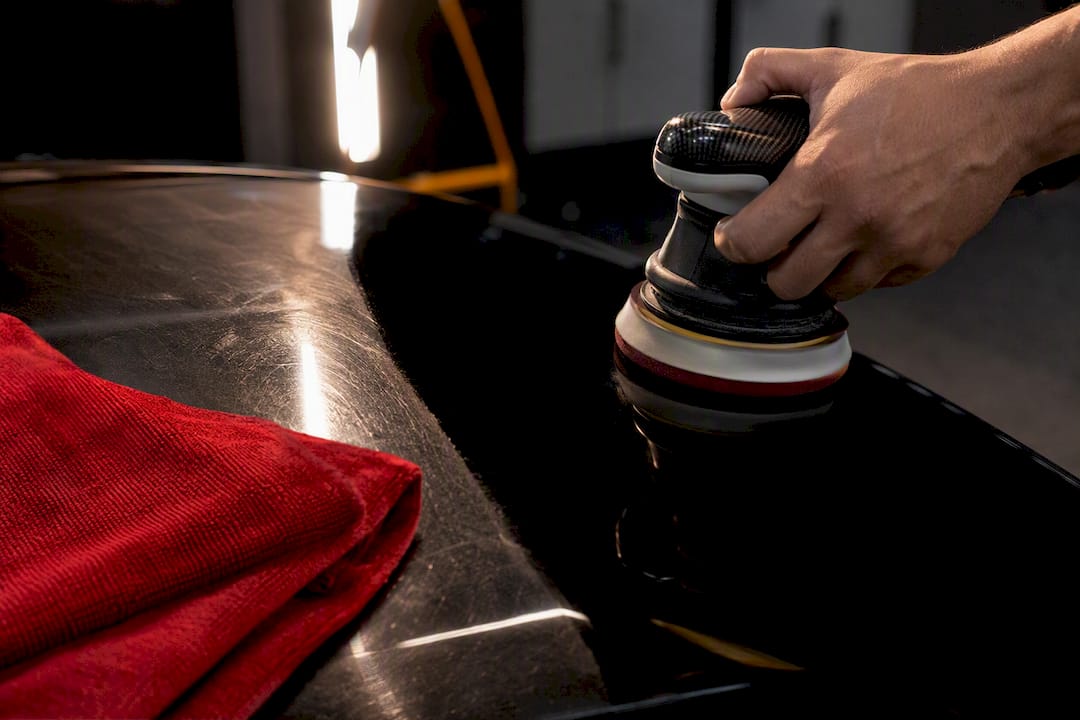
If your black paint shows swirls, holograms, or a hazy film under direct light, paint correction will deliver the biggest visible upgrade you can give the car. The right approach starts with a test spot, moves through machine polishing with matched pads and compounds, and finishes with a sealant or ceramic coating to lock in the results.
TL;DR:
Black paint correction requires careful inspection under proper lighting and a test spot to determine if a one-step or multi-stage process is necessary.
For minor defects, a DIY one-step correction with a DA polisher and gentle polish can restore clarity in 2 to 4 hours, but deeper flaws often need professional multi-stage work.
Proper cleaning, decontamination, masking sensitive edges, and thorough inspection are critical before any polishing to avoid damaging the paint.
Using the right pads and compounds—cutting, refining, and finishing—along with avoiding direct sunlight during correction yields better, safer results on dark finishes.
Professionals are recommended for high-value or difficult black cars, as their expertise minimizes risks like holograms or clear coat thinning, and ensures a lasting, high-quality finish.
Table of Contents
Do You Need a Pro, or Can You Correct It Yourself?
Black paint hides nothing. Swirl marks, holograms, and etching that a silver sedan might mask completely show up under almost any light source on a dark hood, which is why detailers treat black finishes as their own category rather than lumping them in with lighter colors.
Before you touch a machine, inspect the paint properly. Sunlight raking across a panel reveals swirls and haze; a dedicated LED inspection light held at a low angle exposes holograms, random isolated deep scratches (RIDS), and water spot etching that daylight can miss entirely.
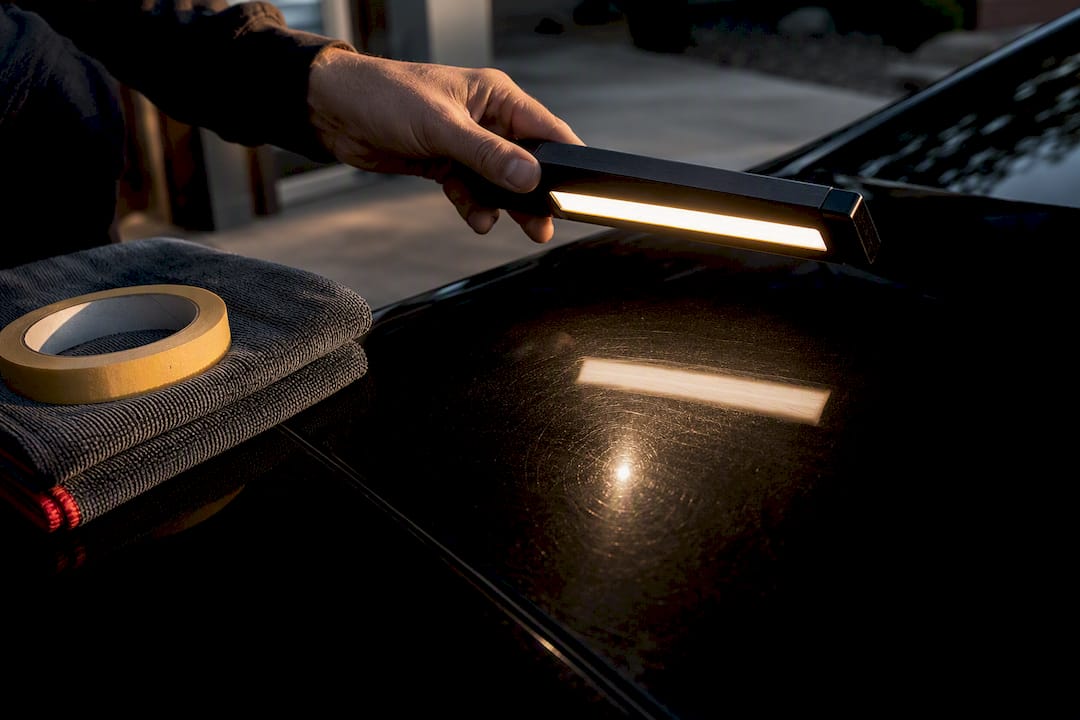
Your test spot tells you almost everything else. Pick a less visible panel, start with your least aggressive pad and polish combination, work a small section, then wipe it down and inspect under LED light before deciding whether to escalate. That single habit, done before any compounding begins, is what separates a controlled correction from a guessing game.
Here’s how to sort DIY from pro territory:
One-step correction (DIY-friendly): Light swirls and minor haze, roughly 2 to 4 hours per vehicle, lower product cost, and forgiving of a learning curve.
Multi-stage correction (often better left to a pro): Heavier oxidation, deep swirls, or holograms from prior bad detailing, running 8 to 20 hours depending on paint condition.
Red flags for professional help: Deep scratches you can catch a fingernail on, unknown or thin clear coat, and a car that’s clearly been over-polished before.
Cost cues: DIY runs the price of pads, compound, and machine rental; professional multi-stage work reflects the extra hours, paint thickness monitoring, and equipment involved.
If your test spot shows minimal improvement after a couple of passes with a moderate pad, that’s usually your signal the defect runs deeper than a one-step fix can reach.
Step-by-Step Paint Correction Workflow for Black Cars
Correction on black paint rewards patience more than horsepower. Every stage below builds on the one before it, and skipping ahead is how swirls turn into holograms.
Wash and decontaminate. Use a pH-neutral soap, follow with an iron decontaminant to dissolve embedded brake dust, then clay bar or use a synthetic clay alternative to lift bonded contaminants the wash left behind. Skipping this step risks dragging grit across the clear coat during buffing, which creates new scratches while you’re trying to remove old ones.
Run your test spot. Choose a representative but low-visibility panel. Start with the mildest pad and polish pairing you own, work a two-foot section, then stop and inspect under LED light before moving on.
Compound where cutting is needed. If the test spot shows real defects remaining, move to a cutting pad and compound on a dual-action polisher, working small panel sections at moderate speed and overlapping passes evenly.
Refine and polish. Switch to a finishing pad and polish to remove the haze and holograms the cutting stage can leave behind. This stage is where black paint either looks corrected or looks “polished but hazy,” and the difference comes down to enough passes and a clean towel for each wipe-down.
Mask sensitive edges and trim. Tape rubber trim, badges, and body lines before you get close with a cutting pad. Edges take less pressure and fewer passes than flat panels; that’s where burn-through happens.
Wipe with isopropyl alcohol and inspect. An IPA wipe strips polishing oils that mask leftover defects, letting you see the real result under LED light before you commit to protection.
Seal the finish. Apply wax, a paint sealant, or a ceramic coating once you’re satisfied with the correction.
Pro Tip: Avoid working in direct sunlight. Heat speeds up compound and polish drying on the pad, which causes hazing and makes the product break down before it finishes its job, a problem Dr. Beasley’s flags specifically for dark finishes.
Correction has to come before any coating goes on. A ceramic layer locks in whatever is under it, swirls included, so sealing a car before you’ve corrected it just preserves the flaws under a glossy top layer.
Choosing the Right Tools Without Overbuying
You don’t need a garage full of gear to correct black paint well. You need the right tool for each stage, and enough restraint to stop when the paint tells you to.
A dual-action (DA) polisher is the right call for the overwhelming majority of owners. It’s forgiving, oscillates rather than spins, and gives you time to react before you burn through clear coat. A rotary polisher cuts faster and can produce a deeper gloss in trained hands, but it also removes clear coat faster and holograms more easily on black paint, which is exactly the defect you’re trying to eliminate. Leave the rotary to someone with real experience unless you’re prepared for a steep learning curve.
Pads follow a simple logic:
Cutting pads remove the most material and tackle deep swirls and scratches.
Refining pads sit in the middle, removing lighter defects while starting to restore clarity.
Finishing pads add gloss and erase the micro-marring the earlier stages leave behind.
Keep pads clean between sections, spur them if they’re foam and load up, and store them flat away from dust once you’re done. Products break down the same way: compounds cut, polishes refine, finishing polishes chase clarity, and quick detailers are strictly a maintenance product between full corrections, never a substitute for one.
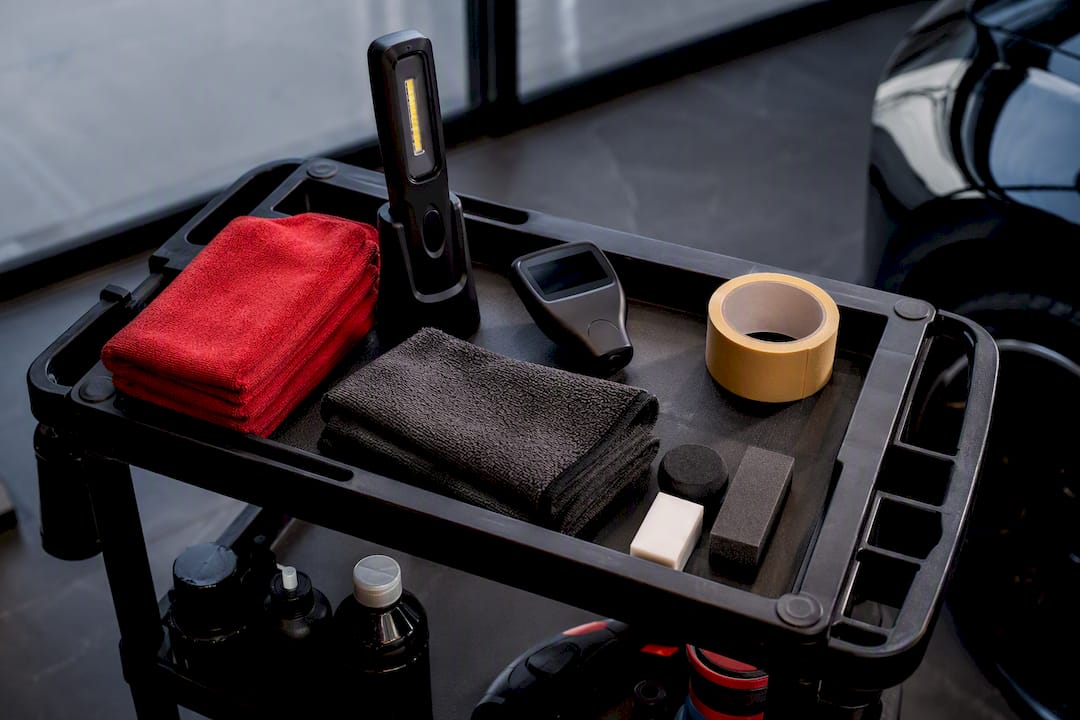
For inspection and prep, an LED light, a stack of clean microfiber towels, IPA and applicators, and painter’s tape for masking cover most jobs. A paint thickness gauge is optional but valuable insurance on a car with an unknown repair history. Once the correction is done, skip automatic car washes with spinning brushes and rough shop towels. They’re the fastest way to undo hours of work in one trip through the tunnel. A local service bay for routine maintenance can still be useful for mechanical upkeep. Just keep it away from the paint.
What a Real Black Car Correction Looks Like
Phenomenal Auto Care built its paint correction process around exactly this test-spot-first philosophy, treating every black vehicle as its own case rather than running a one-size-fits-all program. A typical job runs through a test spot to gauge paint hardness, moves into DA compounding with a matched cutting pad, refines with a finishing polish to erase holograms, then finishes with an IPA wipe and a ceramic coating application.
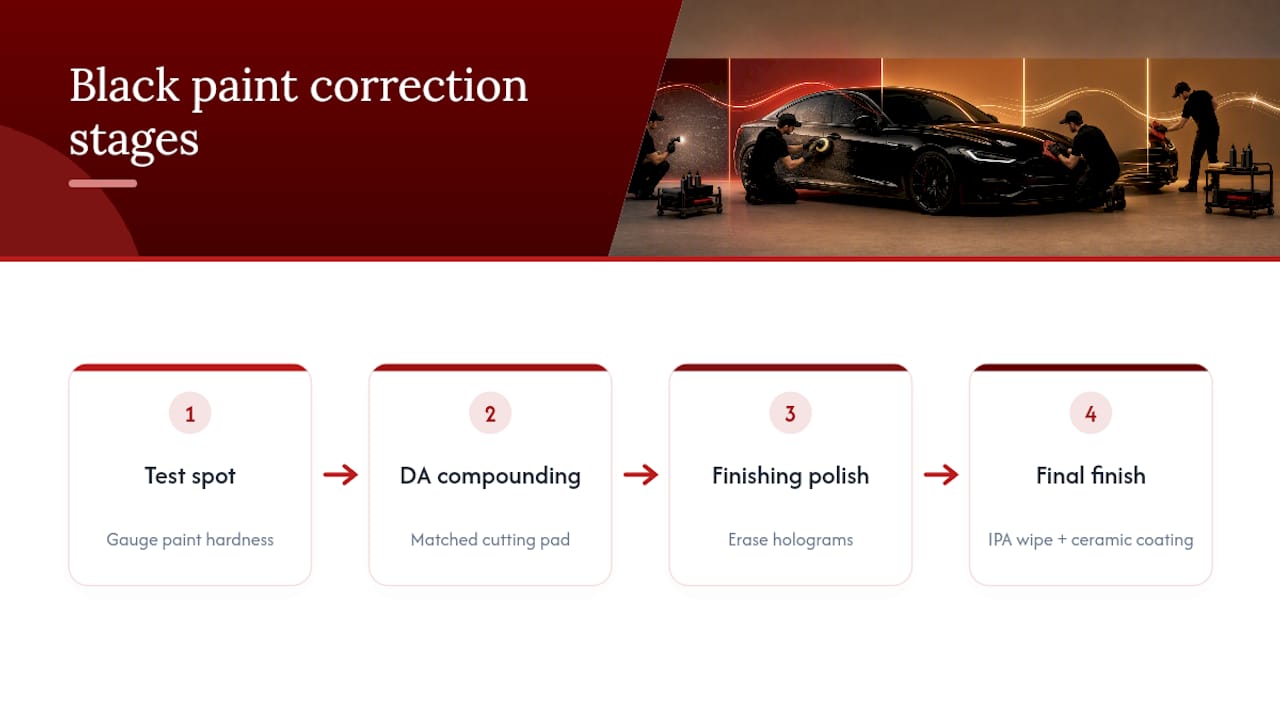
One example worth seeing is the Acura NSX paint correction in the Phenomenalautocare portfolio, which shows this staged approach applied to a car where mistakes aren’t an option.
Why Chasing Maximum Cut Is the Wrong Instinct
The biggest misconception about black car paint correction is that more aggression equals a better result. It doesn’t. The research on black finishes consistently points the other way: softer paints respond better to lighter pads on a DA polisher, and pad choice matters more on black cars than on almost any other color because finishing mistakes are so visible.
Conventional detailing forums push people toward heavier compounds and rotary polishers because those tools produce dramatic before-and-after shots. What they don’t show is the hologramming and clear coat thinning that shows up months later under harsh sun. A test-spot-first mindset isn’t the cautious option. It’s the technically correct one, because it treats clear coat as a finite resource instead of something to burn through chasing a single showroom photo.
What you should prioritize first isn’t the deepest possible correction. It’s a repeatable, documented process: test spot, moderate escalation only when needed, and enough clear coat left afterward to correct the car again in a few years. That’s the difference between a car that looks great once and a car that stays that way.
— Phenomenal
When to Book Phenomenal Auto Care for Black Paint Correction
If your schedule doesn’t allow for an 8 to 20 hour multi-stage correction, or your black car is a collectible, a low-mileage weekend car, or simply too valuable to risk on a learning curve, that’s exactly when a professional makes sense.

A professional paint correction service can bring the correction to your driveway with mobile service across the Phoenix area, using premium pads, compounds, and ceramic coatings suited specifically to dark finishes. Portfolio work, including corrections on cars like the Acura NSX, shows the same test-spot-first discipline this guide walks through, applied to vehicles where there’s zero margin for error. To book, request a quote through the paint correction service page and have a few close-up photos of your worst panels ready, along with notes from your own test spot if you’ve already run one. If you’re near Mesa, the mobile detailing Mesa page has scheduling details, and once correction is done, the ceramic coating page covers how to protect the finish long term.
Sources
The Pro Detailer’s Guide to black paint backs the staged workflow and time estimates. Dr. Beasley’s supports test-spot method and sunlight risk. UTI’s collision guidance confirms the decon-to-seal sequence.
FAQ
Is Car Paint Correction Worth It?
Yes, especially on black cars, where corrected paint shows a dramatic visual improvement that’s harder to see on lighter colors. The return comes from both appearance and from protecting clear coat before defects get worse.
What Is the Best Paint Restorer for Black Cars?
There’s no single best product. The right combination is a cutting compound for deep defects, a polish for refinement, and a finishing polish for clarity, chosen based on what your test spot reveals about paint hardness.
Is Ceramic Coating on a Black Car Worth It?
Yes, but only after correction. A ceramic layer seals in whatever condition the paint is in when applied, so coating over swirls just preserves them under a glossy surface.
Can Scratches on a Black Car Be Fixed?
Light swirls and shallow scratches respond well to machine polishing. Deep scratches that catch a fingernail usually need wet sanding or touch-up paint work, which is a job for a professional like Phenomenalautocare.
Recommended
Comments