
10–60 Minute Triage for Car Owners: Bird Poop Etching Fix
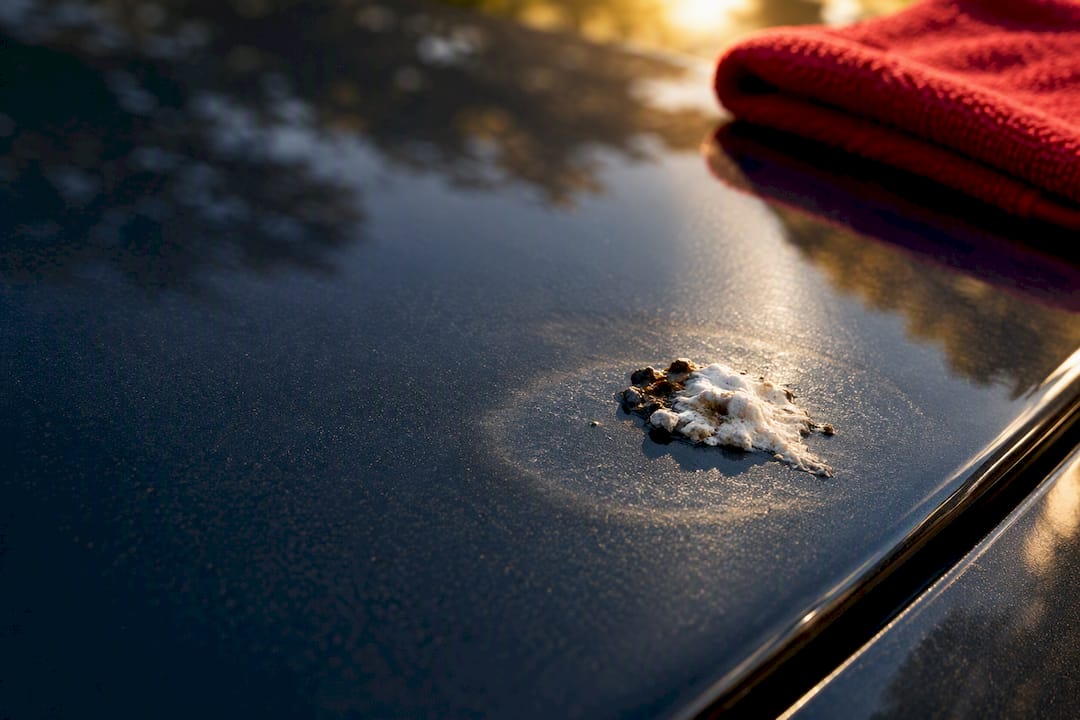
Yes, bird droppings can chemically etch your clear coat, and heat makes it happen faster. The single most important move is to rehydrate the deposit with a lubricant and lift it away with a plush microfiber towel. Never scrub it dry. If a dull or cratered mark remains after cleaning, you’re likely looking at a polishing job or, in tougher cases, professional paint correction.
TL;DR:
Most bird droppings contain uric acid with a pH around 3.0 to 4.5, which can chemically etch clear coat, especially when heated or left long.
Quickly rehydrating the deposit with a lubricant and lifting it with a microfiber towel within the first hour minimizes permanent damage.
Surface etching appears as a dull, cloudy spot, while deeper damage feels wrinkled or cratered and requires professional paint correction.
DIY repair involves starting with fine polish on a soft pad and only escalating to more aggressive compounds if the etch persists after two cycles.
Ceramic coatings and paint protection film offer some resistance and extend the reaction time before damage becomes permanent.
Table of Contents
What Causes Bird Poop Etching on Car Paint?
Bird droppings carry uric acid at a pH commonly around 3.0 to 4.5, acidic enough to attack the resin in your clear coat on contact. That’s the core chemistry behind bird poop damage, but it’s not the whole story.
Droppings also contain grit from a bird’s digestive process. Wipe that grit across dry paint and you’re not cleaning, you’re sanding.
Then there’s heat. Uric acid sinks into warm clear coat far faster than into cool paint, and as the panel cools, that deformation gets locked in place. This is heat-cycle etching, and it’s why a mark left on a car parked in the sun for an afternoon can look far worse than one caught within minutes.
Uric acid chemically softens and pits clear-coat resin
Digestive grit adds abrasion risk during removal
Heat accelerates penetration and hardens the damage in place
How Do You Tell Surface Etching From Deeper Damage?
Not every mark is the same, and that distinction changes your entire approach. A surface etch usually shows up as a dull, cloudy spot. A fractured or deeper etch feels wrinkled or cratered under a fingertip, even after the residue is gone.
Angled light is your best diagnostic tool. Point an LED flashlight across the panel at a low angle; scattered, hazy light reveals surface disruption that’s invisible under overhead sun. Run a wet finger over the area under a microfiber towel too, since texture often tells you more than sight alone.
Dull, matte haze with smooth texture usually means surface-level etching
Wrinkled, gritty, or cratered texture suggests fractured or deeper damage
A hot-water reflow test (brief, on a cool panel) that reduces the outline points to surface etching; no change suggests deeper damage
What to Do in the First 10 to 60 Minutes
Speed matters here more than technique. Work only on cool panels, in shade or early morning, never in direct sun where the paint is already warm and more vulnerable.
Spray a generous amount of quick detailer or a diluted pH-neutral car shampoo directly onto the deposit.
Let it dwell for 60 to 90 seconds so the acid and residue rehydrate.
Pinch and lift the softened residue with a plush microfiber towel instead of wiping it back and forth.
Rinse the area, inspect for remaining haze, and repeat the softening step if any residue clings on.
Pro Tip: Keep a small bottle of quick detailer in your glovebox. Bird droppings you catch within the hour rarely leave a permanent mark, but ones left to bake for a full day almost always do.
Avoid dry wiping at all costs. Dragging a paper towel or dry cloth across dried droppings grinds that digestive grit straight into your clear coat, turning a chemical problem into a mechanical one.
Can You Fix Bird Poop Etching Yourself?
Sometimes, and the safest workflow always starts with the least aggressive product available. Begin with a fine finishing polish on a soft foam pad, and test it on a small, low-visibility section first, like a spot near the fuel door.
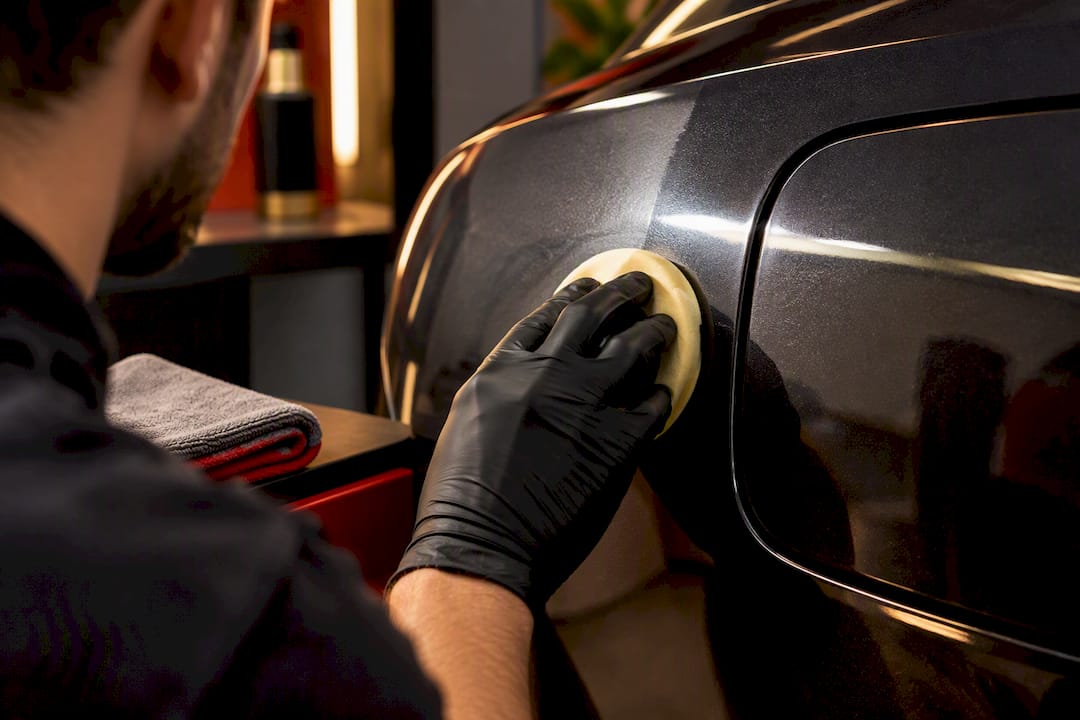
If that doesn’t budge the haze, step up to a light-cut compound with a firmer cutting pad. A dual-action polisher at slow speed with short, overlapping passes gives you far more control than a rotary buffer, and it’s much harder to burn through the clear coat by accident.
Check your work under an LED inspection lamp, not overhead shop lights, and monitor panel temperature as you go. Heat buildup during polishing can mimic the very damage you’re trying to remove.
Start with finishing polish, test small, escalate only if needed
Use slow DA speeds and short passes rather than long, aggressive strokes
Stop if the panel gets noticeably warm to the touch
Watch for the stop signals. If the etch outline is still visible under LED light after two full polishing cycles, if you notice any color change, or if the edge of the panel starts to feel thin, you’ve hit the safe limit. Detailers who specialize in this repair often aim for what’s called functional restoration rather than total removal, improving the look while keeping enough clear coat intact to protect the paint long term. Pushing past that point risks clear-coat strike-through, a mistake that turns a cheap fix into an expensive respray. If you don’t own a DA polisher or don’t feel confident running one, hand-polish conservatively or hand this off to a professional.
When Should You Call a Professional for Paint Correction?
Paint correction works by removing a controlled, microscopic layer of clear coat under calibrated lighting, leveling the etch until the surrounding surface reads flat and glossy again. It’s a precision process, and it’s exactly why professionals catch damage that DIY polishing misses or worsens.
If an etch has reached the pigment layer or shows visible cracking, polishing alone won’t fix it. At that point you’re looking at touch-up paint or a panel respray, and respray costs vary widely depending on the panel size and how much blending into adjacent panels is required.
Minor polishing corrections typically fall in the low to mid hundreds of dollars
Multi-stage correction for more stubborn etching runs mid to high hundreds
A panel respray can run several hundred dollars to over $1,000 depending on the panel and blend work required
Mobile detailing professionals can perform most of these corrections right in your driveway. Phenomenal Auto Care’s paint correction service walks through exactly what a multi-stage correction involves for cars dealing with etching, water spots, and swirl marks.
Does Ceramic Coating Actually Prevent Bird Poop Etching?
Nothing makes your paint immune to bird droppings, but some protection buys you far more reaction time than others. Ceramic coatings resist acidic contaminants significantly better than wax, which means droppings sit on top of the surface longer before they start working into the clear coat underneath.
Wax offers a temporary barrier that wears off within weeks. A ceramic coating requires paint prep and polishing beforehand, but it lasts years rather than weeks, and paint protection film adds a sacrificial layer on top of that for hoods, mirrors, and other high-exposure panels.
Ceramic coatings extend your cleanup window compared with wax, though prolonged exposure can still cause damage
PPF adds a physical, sacrificial layer for the panels birds hit most often
Parking away from trees and power lines, rinsing droppings off promptly, and scheduling periodic inspections all reduce your risk without spending a dime
What Our Detailing Experience Tells Us About Etching Damage
We see bird poop etching on nearly every make and model that comes through our mobile appointments, from daily commuters to weekend exotics. Phenomenal Auto Care specializes in mobile detailing, paint correction, and ceramic coating, and that hands-on volume shapes how we assess severity on-site.
Mobile paint correction works well precisely because we bring calibrated lighting and the right compounds to your driveway, so there’s no waiting for a shop slot while an etch sits and worsens. We grade every mark before touching a polisher, because guessing at depth is how DIY jobs and rushed professional jobs both go wrong.
— Phenomenal
Get Your Etching Assessed and Protected the Right Way
Phenomenal Auto Care is the practical alternative to guessing your way through a DIY polish or gambling on a shop that quotes over the phone without ever seeing your panel. We inspect etching in person, under real lighting, before recommending a fix, so you’re not paying for correction you don’t need or skipping correction you do.

A typical mobile appointment starts with an inspection of the affected panels, a straightforward quote, and a multi-stage correction if the damage calls for it. If the etch is minor, a single polishing pass might be all it takes. If it’s deeper, our paint correction service handles it with the same calibrated approach a body shop would use, minus the drop-off and pickup hassle. Once the paint is corrected, a ceramic coating gives you a real head start against the next dropping that lands on your hood. Request an estimate through our full list of services and we’ll tell you exactly what your car needs, no more and no less.
Where This Information Comes From
The technical claims here draw on Jimbo’s Detailing’s breakdown of etching mechanics, autobodylab’s explanation of paint correction, and Gtechniq’s guidance on hot-water reflow. Coating durability figures come from Car Detox’s research on ceramic coatings and bird droppings, and coating-safe prep techniques for delicate surfaces are covered by IPD Boat Graphics.
Sources
FAQ
How Do You Get Rid of Bird Poop Etching?
Rehydrate the dried deposit with a quick detailer or diluted car shampoo, let it dwell for a minute, then lift it with a plush microfiber towel rather than wiping it. If a dull mark remains, a fine finishing polish often clears surface-level etching, while deeper damage needs professional paint correction.
How Much Does It Cost to Repair Bird Poop Etching on a Car?
Minor polishing corrections generally run in the low to mid hundreds of dollars, while multi-stage correction for stubborn etching lands in the mid to high hundreds. Phenomenal Auto Care’s paint correction service starts from $250, with the final price depending on how many panels need work and how deep the damage goes.
Can Bird Poop Actually Etch Car Paint?
Yes, bird droppings contain uric acid that chemically attacks clear coat, and that damage accelerates on hot panels through what’s known as heat-cycle etching. Left long enough in direct sun, a dropping can leave a permanent dull spot even after it’s cleaned off.
How Can I Repair Bird Poop Etching on My Car Paint Myself?
Start with a fine finishing polish on a soft pad, testing a small area first, and step up to a light-cut compound only if the haze doesn’t clear. Stop immediately if you see color change, feel thin edges, or the mark persists after two polishing cycles under LED light, since pushing further risks clear-coat strike-through.
Does a Hot Water Test Really Help Diagnose Etching?
Pouring hot water briefly over a dried etch mark on a cool panel can cause the clear coat to reflow and reduce the visible outline if the damage is shallow. If the mark doesn’t change at all, that usually signals deeper, fractured damage that needs polishing or professional correction instead.
Recommended
Comments