
Is Ceramic Coating Worth It for a Black Car?
- 3 days ago
- 9 min read
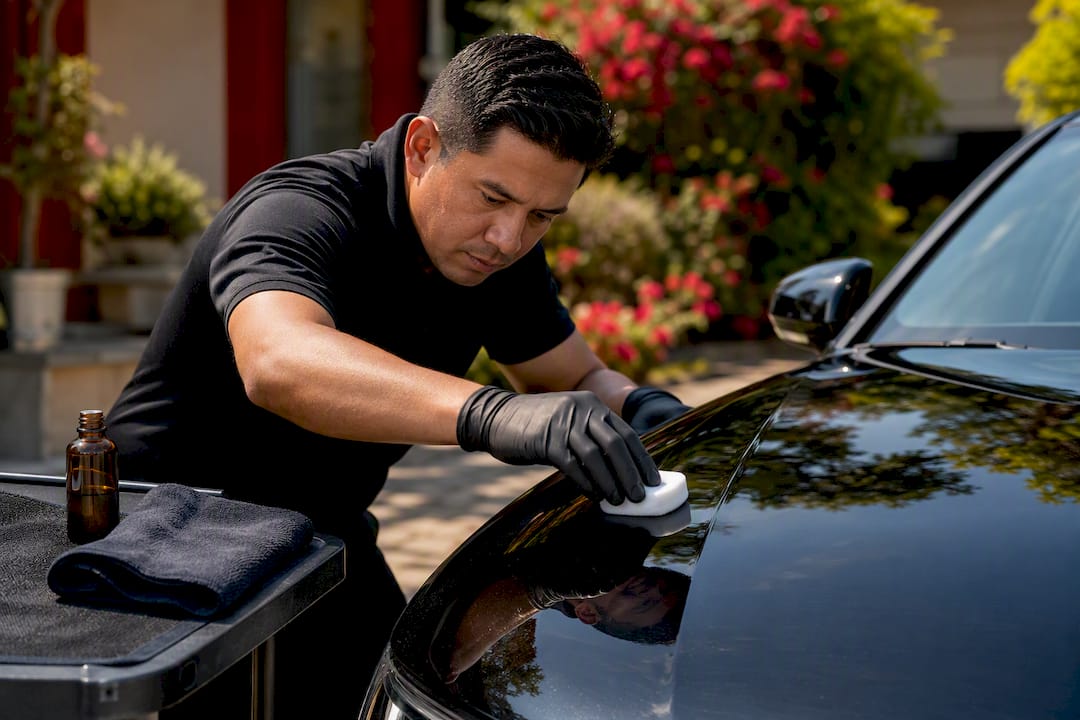
Yes, ceramic coating is worth it for a black car, but only if three conditions are met first. Skip any of them and you’re better off saving your money.
Paint correction comes first. Black paint shows every swirl and scratch, so the surface has to be corrected before a coating goes on, not after.
Application happens in a controlled environment. Ambient temperature, humidity, and dust all affect how the coating levels and cures.
You commit to a maintenance routine. A coating reduces the workload, but it does not eliminate it.
Meet those three, and your first year looks like this: deeper gloss immediately, water sheeting off in sheets instead of beading and sitting, and a wash routine that takes half the time it used to.
Key Takeaways
A ceramic coating protects black paint effectively only when paint correction, controlled application, and consistent maintenance all happen in that order.
Point | Details |
Correction comes before coating | Black paint’s visible flaws get sealed in permanently if you skip multi-stage polishing first. |
Hydrophobic benefits are real | Water beading and quick runoff reduce new swirls and water spot etching during washing. |
9H hardness has limited | The rating measures fine-mark resistance, not protection against rock chips or impacts. |
Durability tracks with prep | DIY sprays last months, DIY kits run one to three years, and professional installs often reach two to five years or more. |
Professional installs control the variables | Phenomenal Auto Care pairs correction with a controlled application and monitored cure for lasting results on black paint. |
Table of Contents
Why Ceramic Coating Matters More on Black Cars
Black paint has almost no forgiveness. Light paint hides fine scratches because there’s less contrast between the defect and the surrounding surface. On black paint, every swirl mark catches light at a different angle than the surrounding clear coat and reads as a visible scratch under sun or garage lighting.
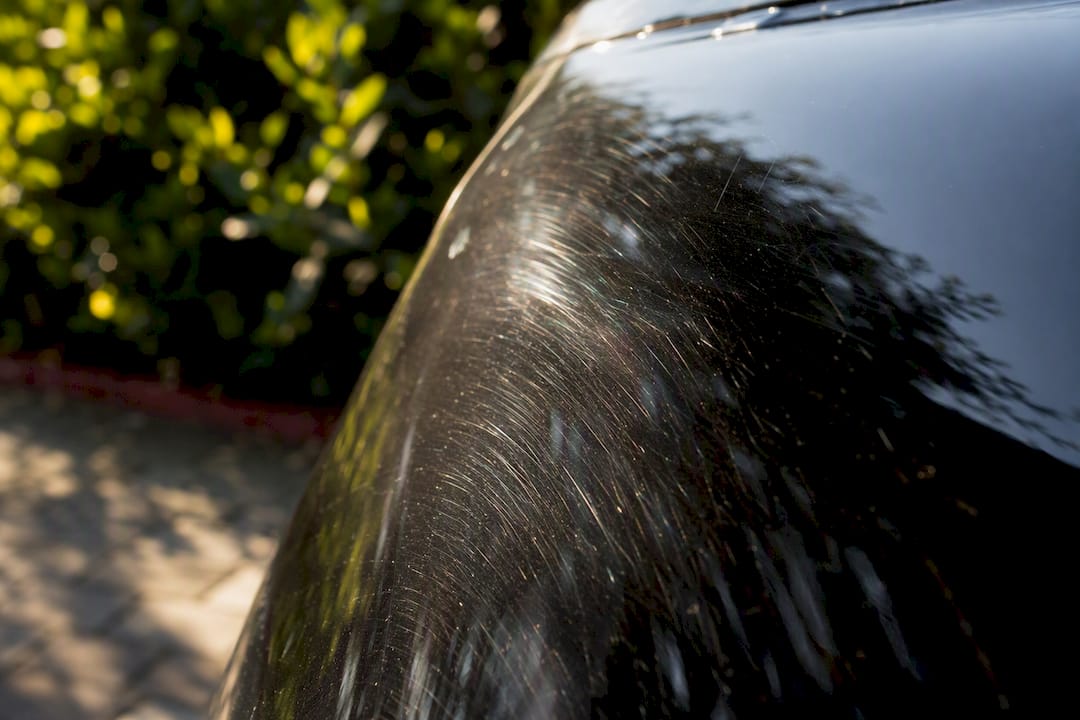
Heat plays a role too. Dark paint absorbs more solar energy than lighter colors, which accelerates clear coat oxidation and gradual gloss loss over years of sun exposure. That’s part of why experts recommend coatings engineered specifically for dark colors, formulated for optical depth and UV stability rather than general-purpose protection.
The practical result: black cars need tighter tolerances everywhere.
Swirls and water spots show up faster and more clearly than on silver, white, or gray paint.
Any prep shortcuts become permanent and visible once the coating locks them in.
Washing technique matters more, since every new mark is a new problem you’ll see daily.
What Ceramic Coating Actually Does (and Doesn’t Do)
A ceramic coating is a liquid polymer, usually silicon dioxide (SiO2) based, that bonds to the clear coat and cures into a semi-permanent layer. That layer is what creates the hydrophobic effect drivers love: water beads up and rolls off instead of sheeting flat across the panel.
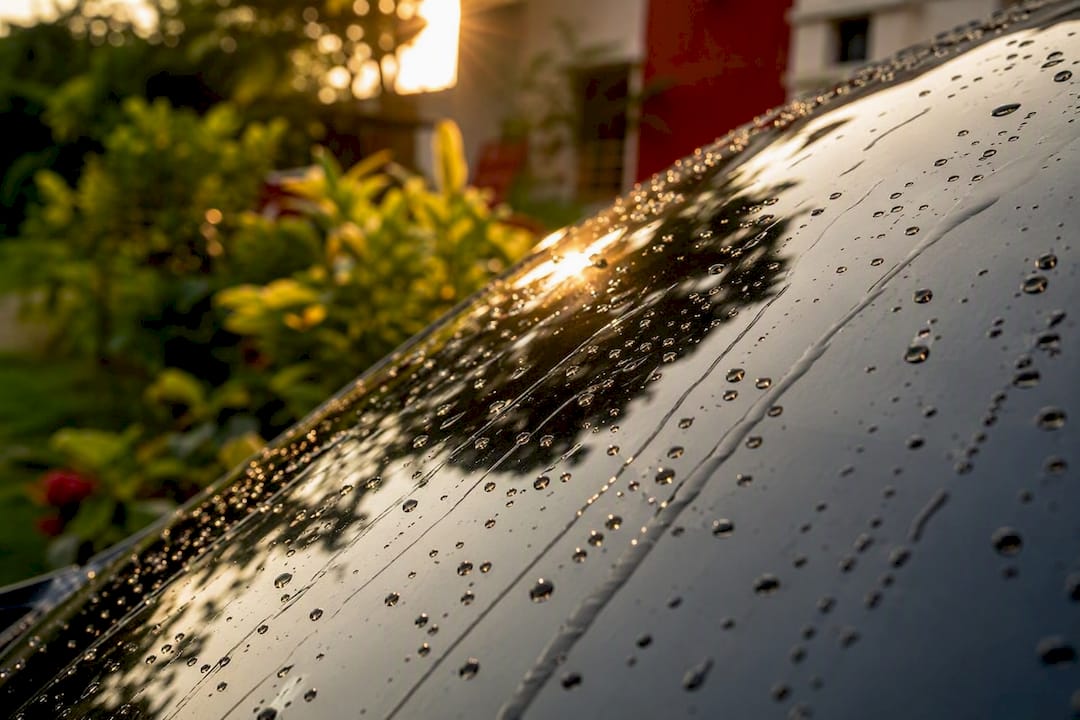
That’s genuinely useful for black cars. Because ceramic coating reduces friction during washing and its hydrophobic surface helps water bead and run off before minerals settle, you get fewer new swirls from wash mitts and fewer water spot etchings baking into the clear coat under the Arizona sun.
Here’s where marketing oversells it. That “9H hardness” rating you see on every bottle refers to a pencil-hardness test, the same scale used to grade pencil lead, not an impact rating. It tells you the coating resists fine marring from wash mitts and light contact. It does not mean the coating stops rock chips, curb rash, or a shopping cart in a parking lot.
Coatings add gloss, hydrophobicity, and UV resistance.
Coatings do not add impact resistance or scratch immunity.
Coatings lock in whatever the paint looks like on application day, flaws included.
Pro Tip: Think of a ceramic coating as a clear photograph of your paint’s current condition, sealed under glass. Whatever swirls or hazing exist the day it’s applied will still be visible a year later. That’s why correction has to happen first, not “eventually.”
How to Prep and Correct Black Paint Before Coating
Correction is not optional on black paint. It’s the step that determines whether the coating enhances your car or just seals in every flaw it already has. Here’s the order that actually works:
Wash with the two-bucket method and a pH-neutral shampoo. One bucket for soap, one for rinsing your mitt, so you’re not grinding dirt back into the clear coat.
Decontaminate the surface. A clay bar or chemical decon (an iron remover, for example) pulls out embedded brake dust and rail dust that washing alone leaves behind.
Run your hand over the paint after decon. If it still feels gritty, it’s not ready for polishing yet.
Machine polish based on defect severity. Light swirls might need a single-stage polish. Heavier oxidation or deeper scratching calls for multi-stage correction, starting with a cutting compound and finishing with a finer polish to restore clarity.
Wipe the panel down with isopropyl alcohol (IPA). This strips polishing oils that would otherwise block the coating from bonding properly.
Inspect under direct, angled lighting. LED panel lights or even bright sunlight will show you exactly what the coating is about to lock in.
Correction is also where most of your budget goes. A bottle of coating costs far less than the labor to correct swirled black paint, and that’s true whether a professional or you does the polishing. Polishing before coating isn’t a nice-to-have step you can shortcut to save a Saturday.
Pro Tip: If your paint has swirls visible from three feet away in daylight, you need correction, not just a wash and decon. Coating over that just makes the swirls glossier.
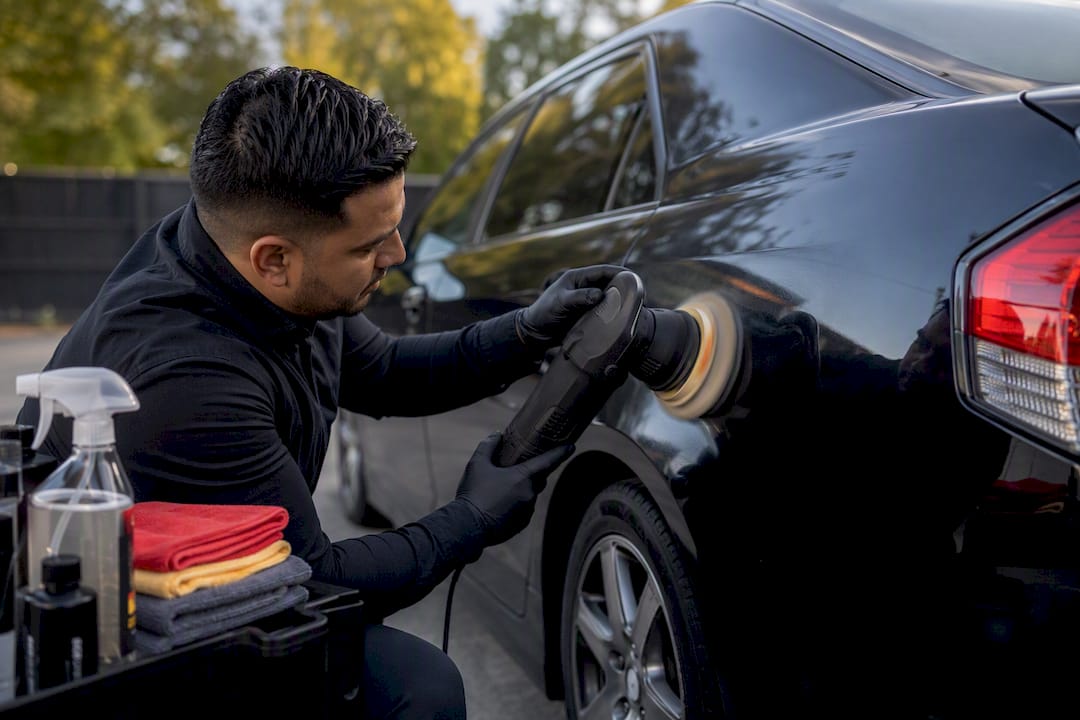
DIY Spray, DIY Kit, or Professional Install: Which Fits You?
Your choice here should match your environment and your patience, not just your budget.
A DIY spray coating is the easiest entry point. No garage required, minimal skill curve, but the tradeoff is durability measured in months, not years. It’s a good stopgap between professional applications, not a long-term solution.
A DIY concentrated kit asks more of you: a clean, temperature-controlled space, careful panel work, and patience during cure time. Done right, these commonly last one to three years in real-world conditions. Done in a hot garage with dust in the air, expect hazing and shorter life.
A professional install delivers the longest window, often two to five years or more, because a trained installer controls both the correction and the application environment. According to longevity data across coating types, how long a coating lasts depends far more on prep quality and maintenance than on which bottle you bought.
Choose DIY spray for a quick refresh between deeper treatments.
Choose a DIY kit if you have real garage space and are comfortable with machine polishing.
Choose a professional install when your paint needs heavy correction or you want showroom-level depth without the trial and error.
Getting the Application and Cure Right on Dark Paint
Black paint punishes sloppy application faster than any other color, because every high spot and streak shows up as a hazy patch once the sun hits it.
Work one panel at a time. Apply in a cross-hatch pattern, then level immediately with a clean microfiber before moving to the next section.
Control your environment. Direct sunlight, high heat, or heavy humidity all interfere with how the coating flashes and cures, and these conditions raise the risk of high spots and hazing on dark finishes especially.
Respect flash time between coats and cure time before driving. Flash typically runs a few minutes per panel; full cure can take 24 to 48 hours depending on the product, during which the car should stay dry and garaged.
Add a second or third coat if you want maximum depth. Many installers apply two to three coats on black vehicles, since each additional layer adds a bit more optical depth, though the gain shrinks with each extra layer.
Pro Tip: Never apply ceramic coating in direct Arizona sun, even in cooler months. The panel heats up faster than you can level the product, and you’ll be buffing out haze instead of admiring gloss.
Maintaining a Coated Black Car Without Undoing the Work
A coating buys you time and reduces damage risk, but it doesn’t make maintenance optional. Black paint still needs a routine, just a lighter one than uncoated paint requires.
Wash every one to two weeks using the two-bucket method, more often if you’re driving on dusty roads.
Stick to pH-neutral, wax-free shampoos. Waxes with fillers can mask the coating’s hydrophobic behavior and eventually build up residue.
Use a spray booster every month or two to refresh hydrophobicity between full washes, especially heading into monsoon season.
Dry the car immediately after washing with a clean microfiber or blower. Water left to air-dry on black paint leaves mineral spots that are far more visible than on lighter colors.
Skip automated brush washes entirely. The brushes carry grit from other cars and will put swirls right back into paint you just corrected.
Recommended maintenance guidance for dark paint backs this up directly: pH-neutral products, controlled drying, and avoiding brush washes all extend how long the coating performs visually.
Pro Tip: Keep a dedicated drying towel just for your coated car. Cross-contamination from towels used on other vehicles is a sneaky way swirls creep back in.
Common Mistakes That Ruin a Black Car’s Ceramic Coating
Most coating failures on black paint trace back to the same handful of mistakes, and nearly all of them are avoidable.
Skipping correction to save money. A coating locks in whatever the paint looks like on application day, so uncorrected swirls just become permanently glossy swirls.
Believing bottle longevity claims at face value. A five-year claim on the label assumes ideal prep and maintenance, conditions most DIY jobs never fully hit.
Applying in the wrong conditions. Direct sun or high humidity during application is the single most common cause of hazing and high spots.
Underestimating the real cost driver. The correction labor, not the coating product, is usually the bigger line item on any professional quote.
How Phenomenal Auto Care Approaches Black-Car Coatings
Every job starts with an honest assessment, not a sales pitch. We inspect the paint under direct lighting, flag existing swirls or oxidation, and walk you through exactly what correction the finish needs before any coating touches the panel.
From there, the process follows the same order every time: correction first, then a controlled application environment, then a monitored cure period where the vehicle stays protected from dust and moisture. That sequence is what separates a coating that lasts years from one that hazes out in months.
Our track record backs this up. Phenomenal Auto Care holds a 5-star rating from more than 250 customers across Arizona and has earned several community awards along the way, built one car at a time.
If you’re evaluating a shop, ask these three questions:
Does the quote separate correction cost from coating cost?
What environment will the application happen in?
What does the cure and pickup timeline look like?
Question to Ask | What It Tells You |
Is correction quoted separately? | Shows whether prep is being treated seriously or bundled as an afterthought. |
Where is the coating applied? | Controlled indoor space beats a driveway job every time on black paint. |
What’s the cure timeline? | A rushed pickup often means a coating that hasn’t fully leveled. |
Where the Conventional Advice Gets It Backward
Most articles on ceramic coating for black cars lead with the coating itself: which brand, how many layers, how glossy the after photos look. That’s backward. The coating is the easiest part of this entire process. Correction is where the actual work, cost, and risk live, and it’s the part most owners try to skip.
We’d also push back on the idea that any coating “future proofs” black paint against neglect. It doesn’t. A coated car washed with a gas station brush wash or dried by air will develop water spots and fine marring just like an uncoated one, only the owner assumes the coating is failing when really the maintenance failed.
If you take one thing from this guide, prioritize the inspection before you shop for products. Get someone qualified to look at your paint under real lighting and tell you honestly whether you need a light polish or a full multi-stage correction. That single decision determines whether your coating investment pays off for five years or gets buried under haze in five months.
— Phenomenal
Get Your Black Car Coated the Right Way
Phenomenal Auto Care handles the part most DIY guides gloss over: correcting the paint properly before a single drop of coating goes on. Where a bottled kit leaves you guessing at cure conditions in your own garage, our process runs assessment, correction, and application in a controlled setting, so the gloss you see on day one is still there years later.

We serve black-car owners across the Phoenix area with mobile and in-shop options, including ceramic coating in Phoenix, and every job starts with the same honest paint assessment described above. If your black paint has visible swirls or you’re just tired of chasing water spots every weekend, book a ceramic coating consultation and get a straight answer on what your paint actually needs before you spend a dollar on product.
Sources
Recommended
Comments