
10 Minute Diagnosis That Finds the Mold Smell in Your Car

Most musty car smells trace back to moisture feeding mold in the A/C evaporator or damp interior materials, not a mechanical problem. Stop the smell from getting worse right now: switch the compressor off, run the fan on high for a few minutes to dry the system, and pull out any wet floor mats or gym bags. Then work through the diagnostic checklist below to find the actual source before it spreads.
TL;DR:
Most musty car odors stem from mold in the HVAC evaporator or damp interior materials, not mechanical issues, and can often be addressed with simple DIY routines.
Replacing the cabin air filter and performing regular fan-drying at the end of drives prevents mold growth more effectively than masking sprays or disinfectants.
Persistent odors after basic cleaning indicate deeper problems like clogged drains, soaked padding, or hidden mold spots requiring professional inspection and treatment.
Commercial mold removal products such as foam cleaners and enzyme treatments are effective when used in the correct sequence, but ozone treatments are best left to specialists.
Regular maintenance practices, like clearing debris from the cowl and never leaving wet items in the car, are the cheapest and most reliable ways to prevent odor recurrence.
Table of Contents
What Causes a Mold Smell in a Car (and Why the A/C Makes It Worse)
That blast of musty air the second you start the engine isn’t your imagination. It’s the smell of a damp, dark evaporator box that’s been sitting closed up since your last drive.
Every time you run the air conditioner, condensation forms on the evaporator coil. That moisture is supposed to drain away, but it often lingers on the fins long enough for bacteria and mold to colonize the surface. According to Motor1, that biofilm buildup is the direct cause of the “first blast” odor drivers report the moment the blower kicks on. Once airflow disturbs that film, spores and musty-smelling compounds get pushed straight through the vents into your face.
The cabin air filter often makes things worse. It’s designed to trap dust, pollen, and moisture, and that’s exactly the problem: a damp filter sitting in a dark housing behind your glovebox is a small mold farm. A clogged condensate drain or a cowl intake packed with leaves and organic debris add fuel, since trapped water has nowhere to go except back into the HVAC housing or down into the carpet.
Interior wetting compounds the issue. A slow sunroof drain leak, a bad door seal, or a spilled drink that never fully dried can soak carpet padding and seat foam. That moisture doesn’t evaporate quickly in an enclosed cabin, and it produces the same sour, mildew smell as the HVAC contamination, just from a different location.
Not every bad smell in your car is mold, though. It helps to know the difference:
Sweet, syrupy smell: usually coolant, often paired with a foggy windshield. That points to a heater core leak, not mold.
Rotten egg smell: typically a fuel or exhaust issue, not moisture related.
Musty, sour, or “wet basement” smell: classic mold and mildew, usually tied to the A/C or wet upholstery.
Electrical or burning smell: a wiring or component issue, unrelated to moisture.
If the smell is musty and gets stronger the moment you turn on the air, you’re almost certainly dealing with evaporator contamination or a damp interior, which is exactly what the next section helps you confirm.
How Do You Diagnose Where a Musty Smell Is Coming From?
Finding the source takes ten minutes and no special tools. Work through these checks in order, because each one narrows down the possibilities before you spend money on cleaners or a shop visit.
Note when the smell shows up. Only at first startup? That points to evaporator biofilm. Constant, even with the A/C off? That suggests wet carpet, seat foam, or trunk padding instead.
Pull the cabin air filter. It’s usually behind the glovebox or under the hood near the windshield base. A damp, dark, or visibly dirty filter is often the whole story, or at least half of it.
Check the cowl and fresh-air intake. Pop the hood and look at the plastic grille at the base of the windshield. Leaves, seed pods, and grime here feed mold and block airflow.
Run the A/C for five minutes, then check underneath the car. A puddle near the firewall on the passenger side means the condensate drain is working. No puddle at all after heavy A/C use suggests a clogged drain, which traps water inside the HVAC housing.
Map the smell by location. Get low and sniff near the vents, then the footwells, then the trunk. Vents smelling worse than the rest of the cabin points to HVAC contamination; footwells or trunk smelling worse points to a leak.
Press on carpet and door panels. Squishy, cool-to-the-touch carpet is wet carpet, even if it looks dry on the surface. Check under floor mats and in the spare tire well too.
Rule out seals. Run a hose gently over the sunroof and door seams for a minute, then check the same spots inside for moisture. If you find a leak here, the smell is a water intrusion problem, not an HVAC one.
Pro Tip: If the smell is sweet rather than musty, and you notice white residue on the inside of the windshield or the coolant level keeps dropping, stop troubleshooting for mold and get the heater core checked. Coolant vapor in the cabin is a health hazard, not just an odor problem.
Owners frequently blame the refrigerant itself for a bad A/C smell, but that’s rarely the culprit. Refrigerant is essentially odorless in normal operation, and Motor1’s reporting confirms that biological growth in the HVAC system, not a mechanical or refrigerant fault, is behind nearly every musty A/C complaint.
Step-by-Step DIY Fixes to Remove Mold Smell From Your Car
Once you know whether the smell is HVAC based, interior based, or both, work through these steps in order. Skipping ahead to the strongest product without doing the basics first is the most common reason DIY treatments fail.
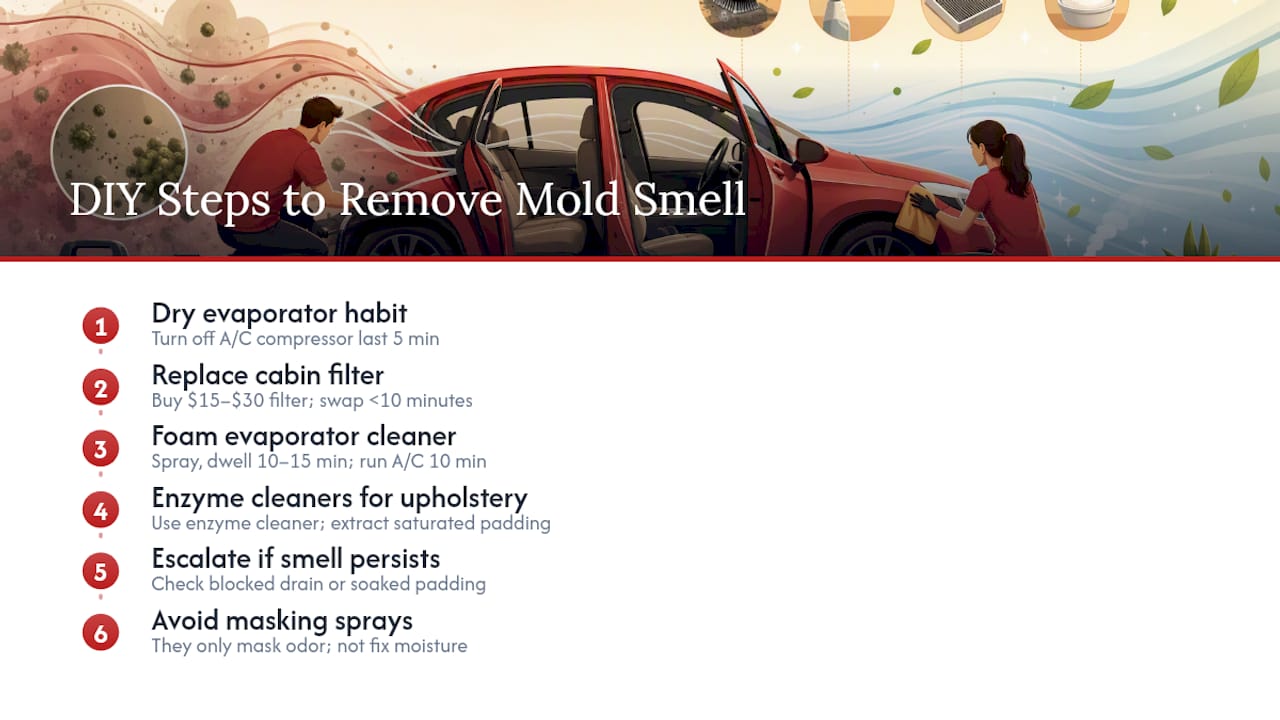
Start with the habit that costs nothing. Before you even touch a cleaner, turn off the A/C compressor button (not the whole fan) for the last five minutes of any drive and let the blower run on high. This dries residual condensation off the evaporator coil before the car sits parked and sealed up in the heat. Consumer Reports recommends this exact routine as a low-effort way to keep the evaporator from staying damp long enough to grow mold in the first place.
Replace the cabin air filter. This is the cheapest fix with the biggest visible payoff. Most filters run somewhere in the $15 to $30 range for the part alone, and swapping it takes less than ten minutes on most vehicles once you locate the housing. If the old filter is gray, matted, or damp to the touch, that alone may explain most of your odor complaint.
Treat the evaporator with a foaming cleaner. These products come with a thin nozzle that reaches through the HVAC drain tube or a dedicated access point (check your owner’s manual or a quick search for your model). You spray the foam, let it expand and coat the evaporator fins, and let it sit for the dwell time printed on the can, typically 10 to 15 minutes. Afterward, run the A/C on full cold with the windows down for ten minutes to flush residue and dry the coil completely. Skipping that drying step is a common reason people spray the product and still smell mold a week later.
Move to enzyme cleaners for upholstery and carpet. If your smell mapping pointed to wet carpet, floor mats, or seat foam, an enzyme-based cleaner works better than a scented spray because it breaks down the organic matter mold actually feeds on rather than just perfuming over it. For carpet padding that’s genuinely saturated, a carpet extractor or steam cleaner pulls moisture out of the fibers instead of pushing more liquid into already-wet padding.
Here’s the reality check worth keeping in mind: MotorBiscuit’s reporting on musty car smells makes clear that DIY foam treatments and filter swaps resolve most light HVAC odors, but a smell that persists after these steps usually signals deeper moisture, like a blocked drain or soaked padding, that needs more than a spray can.
That’s also why air fresheners, disinfectant sprays, and general cleaners fall short on their own. They mask odor compounds temporarily without removing the moisture or organic material feeding the mold, so the smell almost always comes back within days. The same MotorBiscuit reporting is blunt about this: masking tactics give short-term relief while leaving the underlying contamination to reestablish itself.
Ozone treatment and professional fogging sit at the far end of the DIY spectrum. Ozone generators oxidize odor-causing organic material and can be effective on stubborn HVAC contamination, but they require the vehicle to be sealed and unoccupied during treatment, and the cabin needs thorough ventilation afterward before anyone rides in it again. This is generally not a first move. It’s a step to consider after basic cleaning fails, and one many owners hand off to a professional rather than running themselves.
When Should You Call a Professional for Car Mold Smell?
DIY treatment handles the majority of musty smell complaints, but certain signs mean you’re past the point where a spray can and a filter swap will fix things.
Watch for these red flags:
The smell returns within a week or two of a full DIY treatment, filter replacement, and fan-drying routine.
You can see visible mold, dark spots, or fuzzy growth on carpet, seat foam, or door panel padding.
Water is visibly pooling inside the cabin, under mats, or in the trunk after rain or A/C use.
The odor keeps coming back even after you’ve confirmed the condensate drain is clear and the cowl intake is clean.
A professional visit for entrenched odor problems typically involves a deeper HVAC cleaning that reaches parts of the evaporator housing a consumer foam can’t fully access, interior extraction to pull moisture out of padding rather than just the carpet surface, and in more stubborn cases, ozone or antimicrobial fogging treatment. If a leak caused the wetting in the first place, like a failed door seal or sunroof drain, that repair needs to happen too, or the odor will simply return.
Budget-wise, DIY treatment usually runs $20 to $60 in filter and cleaner costs and an afternoon of your time. Professional interior deep cleaning and HVAC service costs considerably more, but it also reaches contamination that’s physically inaccessible without disassembling dashboard components, which isn’t a realistic weekend project for most owners.
Before you hire anyone, ask what specific methods they use on the HVAC system versus the interior, whether they document the job with before and after photos, and whether their treatment addresses the moisture source or just the smell. A provider who can’t explain what caused the odor in the first place is more likely selling you a temporary fix.
How to Prevent Mold Smell From Coming Back in Your Car
Preventing recurrence takes almost no extra effort once it’s a habit, and it’s far cheaper than repeating a deep clean every few months.
End every A/C drive with a dry-out cycle. In the last five minutes before you park, switch off the compressor and let the fan run on high. This one habit, backed directly by Consumer Reports, evaporates the condensation clinging to the coil before the car sits sealed and hot for hours.
Replace the cabin air filter on a schedule, not just when it smells bad. Every 12,000 to 15,000 miles is a reasonable default for most vehicles, though dusty or high-pollen climates call for more frequent swaps.
Clear the cowl intake and check the drain every few months. A quick look under the wiper area for leaves and debris, paired with running water through the A/C drain tube to confirm it flows freely, catches blockages before they cause standing water.
Never leave wet items in the car. Wet gym clothes, a damp umbrella, or a spilled drink left overnight gives mold exactly the moisture it needs. Dry anything wet immediately or pull it out entirely.
Check sunroof drains once a season. These small tubes clog easily with debris and are a sneaky, overlooked source of water intrusion that shows up as a musty trunk or headliner smell months later.
Pro Tip: If you catch a faint musty smell returning before it gets bad, that’s usually the evaporator starting to recontaminate, not a full relapse. A single foaming evaporator treatment and a week of consistent fan-drying at the end of drives will often knock it back out before it becomes a full DIY project again.
The habit that matters most here is genuinely the fan cycle. It’s the one prevention step that requires zero purchases, zero time investment, and directly targets the exact mechanism that starts the whole problem.
When a Mobile Detailer Is the Practical Choice for Car Odor Removal
Some odor problems are simply beyond what a spray can and an afternoon can fix. Deep foam saturation in seat padding, HVAC contamination tucked behind dashboard components, or a time crunch before you need to sell or trade in the car are all situations where a mobile detailing visit makes more sense than another round of DIY.
We built our odor removal service around exactly these entrenched cases. Our interior deep clean pairs steam extraction, which lifts moisture and grime out of carpet and seat fibers rather than pushing it deeper, with our Bio Bomb odor remover treatment, which targets the organic contamination that scented sprays only cover up. Because we come to you, there’s no dropping the car off for a day or arranging a ride home. We show up, do the work at your home or office, and hand the keys back.
Some mobile detailing providers have a strong reputation from satisfied customers and community recognition, reflecting consistent care for various vehicle types, from daily drivers to luxury cars. If you’re preparing for a visit, clear out personal items and note where the smell seems strongest. That helps us target the treatment instead of guessing.
Does a Musty Smell Hurt Your Car’s Resale Value?
It does, and often more than owners expect. A musty smell is one of the first things a potential buyer or trade-in appraiser notices the moment they open the door, and it reads as a sign of neglect even when the mechanical condition of the car is fine. Unlike a scratch or a worn floor mat, odor is hard to inspect for in a quick test drive, which makes buyers assume the worst: hidden water damage, a flood history, or a leak nobody’s disclosed.
Dealers and private buyers alike will often use a persistent smell as leverage to negotiate the price down, sometimes by a meaningful margin, simply because removing entrenched odor requires professional intervention they’ll have to pay for themselves. A car that smells clean, by contrast, projects the same message as clean paint and tidy upholstery: this vehicle was maintained.
Beyond resale, there’s the daily comfort cost. A musty cabin makes every commute, every carpool, and every long drive a little worse, and mold exposure inside an enclosed space isn’t something you simply get used to. Passengers notice it immediately, even when the driver has gone nose-blind to a smell they’ve lived with for months. Fixing the odor isn’t just a resale strategy. It’s the difference between a car that feels cared for and one that just gets you from place to place.
Do Commercial Mold Removal Products Actually Work in Cars?
Results vary a lot depending on what’s actually causing your smell, and matching the product to the problem matters more than picking the strongest-sounding one on the shelf.
Foaming evaporator cleaners are generally the most effective category for HVAC-origin odors, since they’re designed to expand and coat the coil fins directly rather than just spraying air freshener through the vents. AmpAuto’s diagnostic guide backs a structured approach: filter replacement, cowl clearing, drain confirmation, and evaporator spray together resolve most musty HVAC odors for typical owners, though the sequence matters more than any single product.
Enzyme-based cleaners perform noticeably better than standard fabric sprays for carpet and upholstery contamination, because they break down the organic material mold feeds on instead of simply masking the smell it produces. General-purpose odor eliminators and scented sprays sit at the bottom of the effectiveness scale for actual mold and mildew; they’re fine for short-term freshness but do nothing to address moisture or biological growth.
Ozone generators and professional fogging systems are the most powerful commercial-grade options, but they’re also the least beginner-friendly, requiring proper ventilation protocols and often professional application to use safely and effectively. For most owners, the practical answer is layering the basics first, filter, drain, foam cleaner, then reaching for enzyme treatment or professional service only if the smell survives that first round.
The Overlooked Fix Nobody Mentions
Most advice on this topic jumps straight to products: buy this spray, try that fogger, run this treatment. What gets skipped is the diagnostic step that actually tells you which product, if any, you need. A car with a wet trunk from a bad sunroof seal doesn’t need an evaporator foam treatment, and a car with pure HVAC biofilm doesn’t need carpet extraction. Guessing wastes money and time.
The other habit that’s chronically underrated is the fan-drying routine. It costs nothing, takes five minutes, and directly interrupts the exact condition, standing moisture on a warm coil, that lets mold take hold in the first place. Owners chase expensive fixes for a problem that a consistent, free habit prevents most of the time.
Where DIY genuinely reaches its limit is saturated padding and inaccessible HVAC housings. That’s not a failure of effort; it’s a physical constraint. A spray can’t reach what’s behind a dashboard, and a shop vacuum can’t fully dry foam that’s been wet for weeks. Knowing that boundary, and calling in help before the smell becomes a permanent fixture in the car, is the judgment call that actually saves money long term.
— Phenomenal
Book a Mobile Detail to Get Rid of That Car Smell for Good
If you’ve run through the filter swap, the foam treatment, and the fan-drying habit and the smell keeps coming back, it’s time for a deeper approach than another can of spray. Phenomenalautocare handles what a home treatment can’t reach: saturated padding, hidden HVAC contamination, and entrenched odor sources, all without you having to drop the car off anywhere.

Our mobile detailing service comes to your home or office across the Phoenix metro area, so there’s no lost afternoon sitting in a shop waiting room. A typical odor removal visit combines steam extraction on carpet and upholstery with our Bio Bomb odor treatment, targeting the actual organic contamination rather than covering it with fragrance. Most customers notice the difference immediately, and it holds because we’re treating the source. If you’re ready to get your cabin smelling clean again, book a mobile detailing appointment in Mesa or check availability for your area to get a service scheduled this week.
Sources
Recommended
Comments